
Anxious - Avoidant Attachment relationship chase and trap
Myira Khan • 23 June 2020
Why the chase and cycle keeps happening
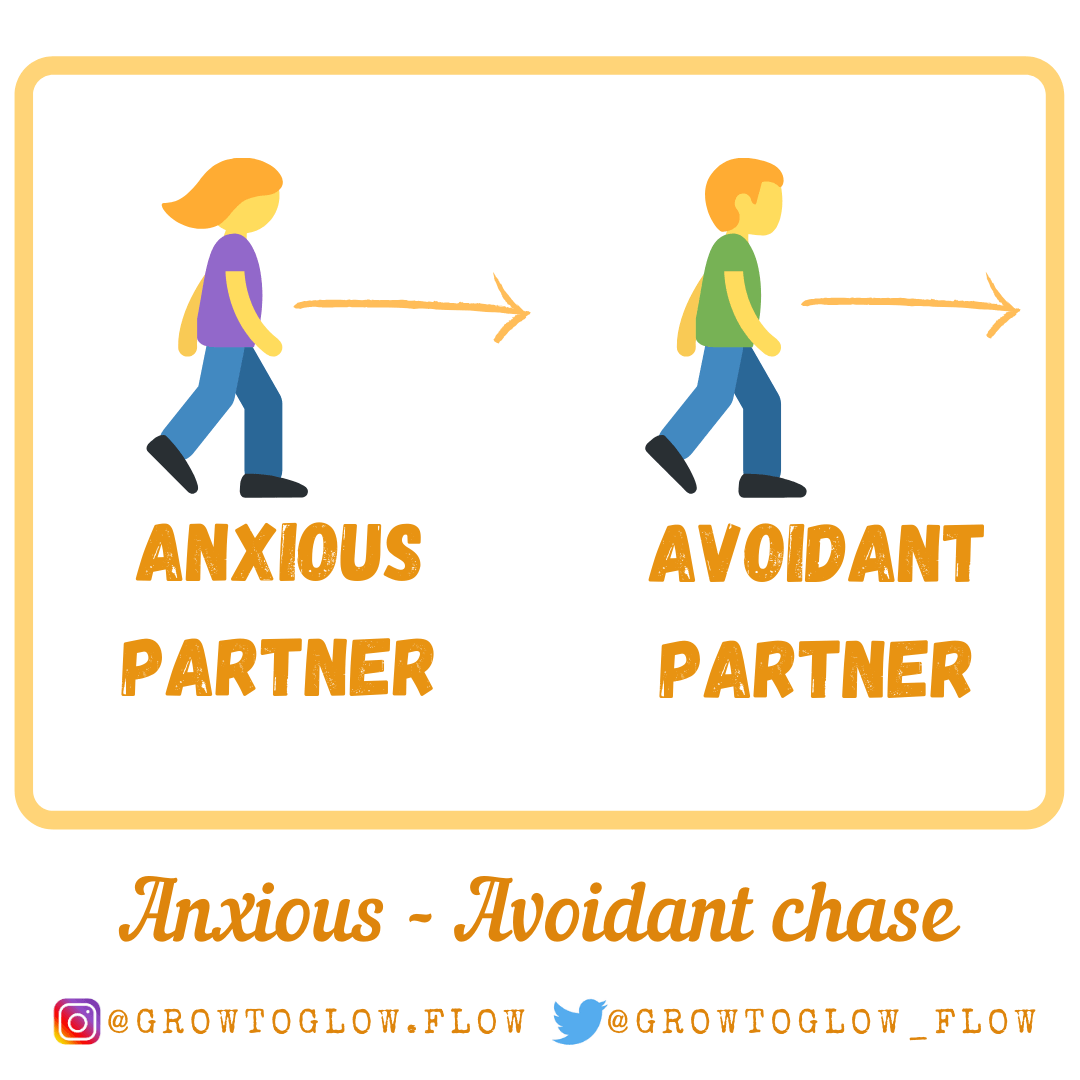
The Anxious - Avoidant Attachment relationship chase
Do you ever find yourself either trying to close down or open up the 'space' between yourself and your partner?
Do you feel that you want to feel more closely connected and intimate with your partner or do you feel suffocated by their 'demands' of more emotional intimacy or closeness with you and you are left wanting some breathing space from them?
We each have our our internal relationship blueprint and attachment pattern. See previous posts which identify the 4 attachment patterns and find out which one you may have.
In each of the 4 attachment patterns, there is an optimum (safe and comfortable) level of closeness and intimacy each attachment pattern likes in relationships.
The anxious-attachment partner wants a close and intimate connection with their partner, which feels safe to them. The 'space' or gap between them is minimum.
The avoidant-attachment partner wants there to be a large gap or space between them and their partner. That space feels safe and comfortable to them.
One is not better than the other. Each feels comfortable and safe with their optimal amount of closeness and space between them and their partner.
The anxious-avoidant chase
The 'chase' (trap or cycle) of the anxoious-avoidant partnership gets triggered because the anxious partner in wanting a close and intimate connection with their partner, is always looking to close down the 'gap' and space between them and their partner, so that the anxious partner has reached their optimum level of closeness in the relationship, which is very little space or gap between them and their partner.
The avoidant partner feels that gap or space is getting too small, i.e. it no longer feels like their optimum level of comfortable space because the anxious partner is closing down the space between them. So the avoidant partner takes 'a step back' or moves back and away from the relationship in order to create their comfortable amount of space again.
This triggers the anxious partner, because of the avoidant partner taking a step back and creating the space, to the anxious anxious partner feeling or interpreting the widening gap as if their avoidant partner is rejecting or dismissing them or that there is a problem in the relationship.
To anxious partner, in seeking reassurance or 'answers' from the avoidant partner, as to why they are pulling away and creating the gap, the anxious partner tries to seek further closeness with the avoidant partner. Each time the anxious partner tries to seek reassurance and close the space between them, the more this triggers the avoidant partner to take further steps away and create more space in the relationship.
And this is the 'chase' of the anxious partner seeking reassurance and closing down the space (taking a step towards the partner) and the avoidant in return taking a step away from the relationship and widening up the gap and space.
This one-step towards the avoidant partner and then one-step away from the anxious partner becomes the anxious-avoidant trap and cycle that happens on an unconsicous level in the anxious-avoidant relationship dynamic, when an anxious and avoidant partners come together. Each one triggers the other's anxiety of either too little (unsafe) space between them for the avoidant partenr or too much (unsafe) space between them for the anxious partner. And so each tries to remedy this in their own way by taking a step towards or away from the other, to create their own optimum level of closeness and space.
If you relate to either being the anxious or avoidant partner, one way to stop this chase and cycle from reoccurng is for both partners to speak openly and honestly with one another about their feelings of intimacy and closeness, and what their own level of safe and comfortable closeness and space is within the relationship.
This helps the other partner from understanding that you each have a different comfort and optimum level of closeness and that the space or closeness you want is not a reflection of your feelings for your partner. It is easy for the anxious partner to interpret that space and distancing by the avoidant as a rejection of them. In return it is easy for the avoidant to interpret the closeness by the anxious as suffocating and overwhelming. Yet neither partner has the intention for the closeness or space to be interpreted in this way.
By being honest and explaining your own comfort levels in the relationship, each partner can support and understand the other as well as allowing the relationship to naturally unfold and grow.
Couples counselling can also offer you the safe space to explore your relationship and help you to understand this cycle if you find yourself in this trap.
Relationship and Attachment patterns is also the theme for our upcoming Grow To Glow June Book Group on Thursday 25th June at 6pm. To register for the Book Group, please email myira@myirakhancounselling.co.uk to reserve your place.
#relationships #attachment #attachmentpatterns #attachmenttheory #childhood #emotions #emotionalavailability #relationshipcoaching #marriage #partnership #intimacy #avoiance #anxiousattachment #avoidantattachment
Follow Grow To Glow on Twitter @growtoglow_flow and on Instagram @growtoglow.flow
#relationships #attachment #attachmentpatterns #attachmenttheory #childhood #emotions #emotionalavailability #relationshipcoaching #marriage #partnership #intimacy #avoiance #anxiousattachment #avoidantattachment
Follow Grow To Glow on Twitter @growtoglow_flow and on Instagram @growtoglow.flow
What Does Authentic Confidence Actually Mean?
Why Does Having More Clothes Make Getting Dressed Harder? Colour analysis helps to streamline your wardrobe, knowing that your clothes suit you.

Blog post for What Does Holistic Wellbeing Really Mean?
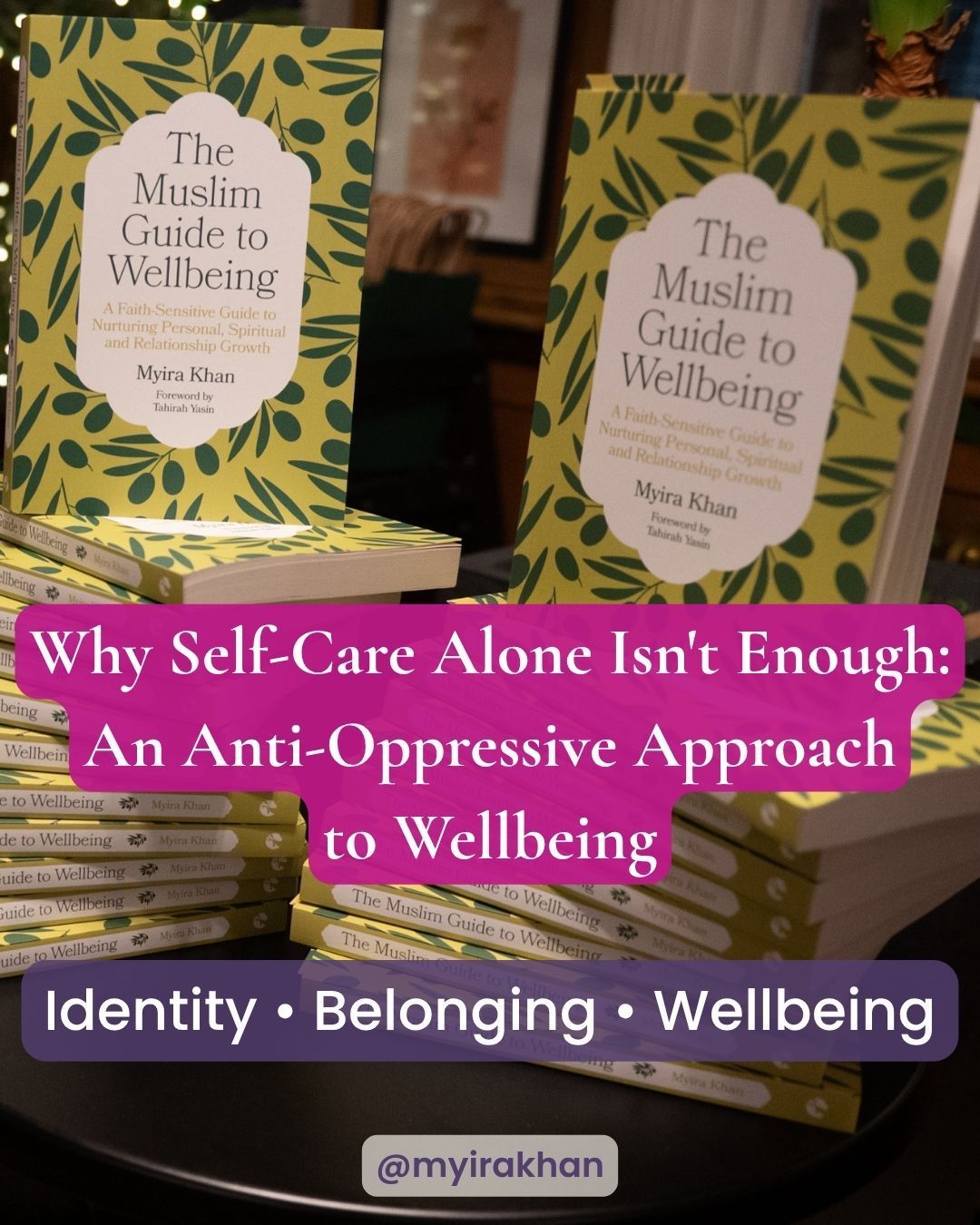
Self-care matters—but it isn't enough on its own. Discover an anti-oppressive approach to wellbeing that explores identity, belonging, relationships and the wider factors shaping how we live and thrive.
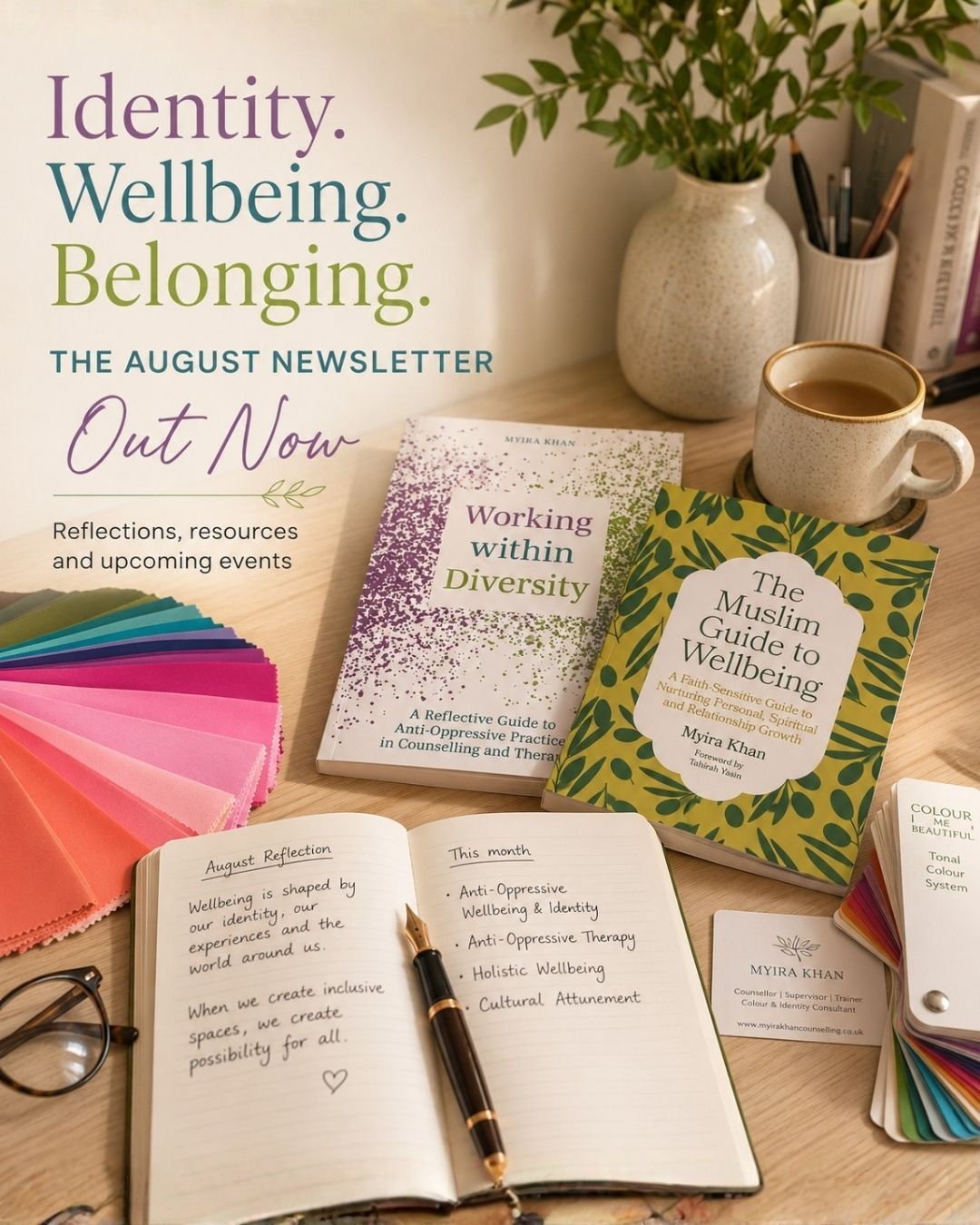
Read the latest . . .
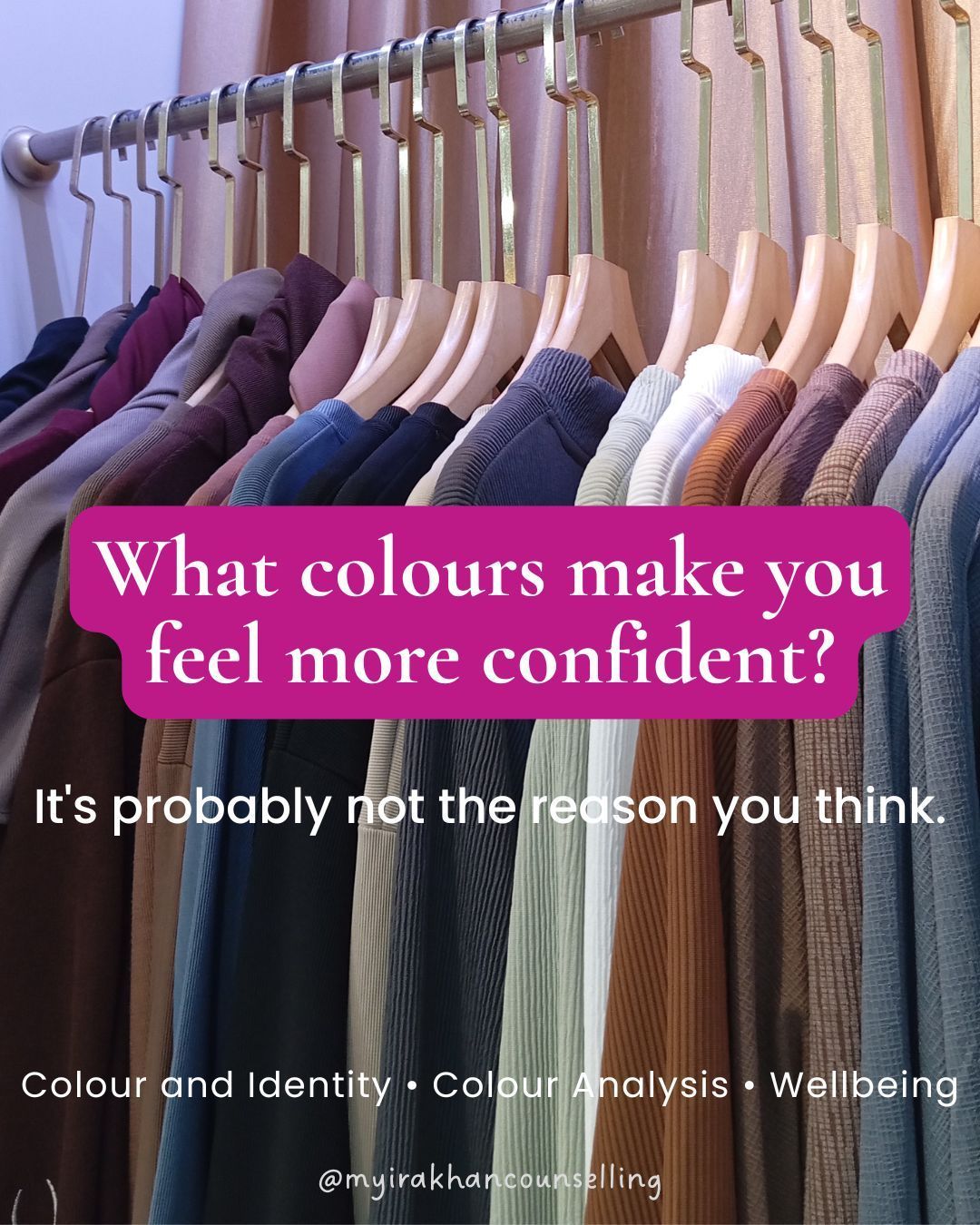
Can colour influence confidence? Discover how professional colour analysis helps you find colours that support confidence, identity and authentic self-expression.
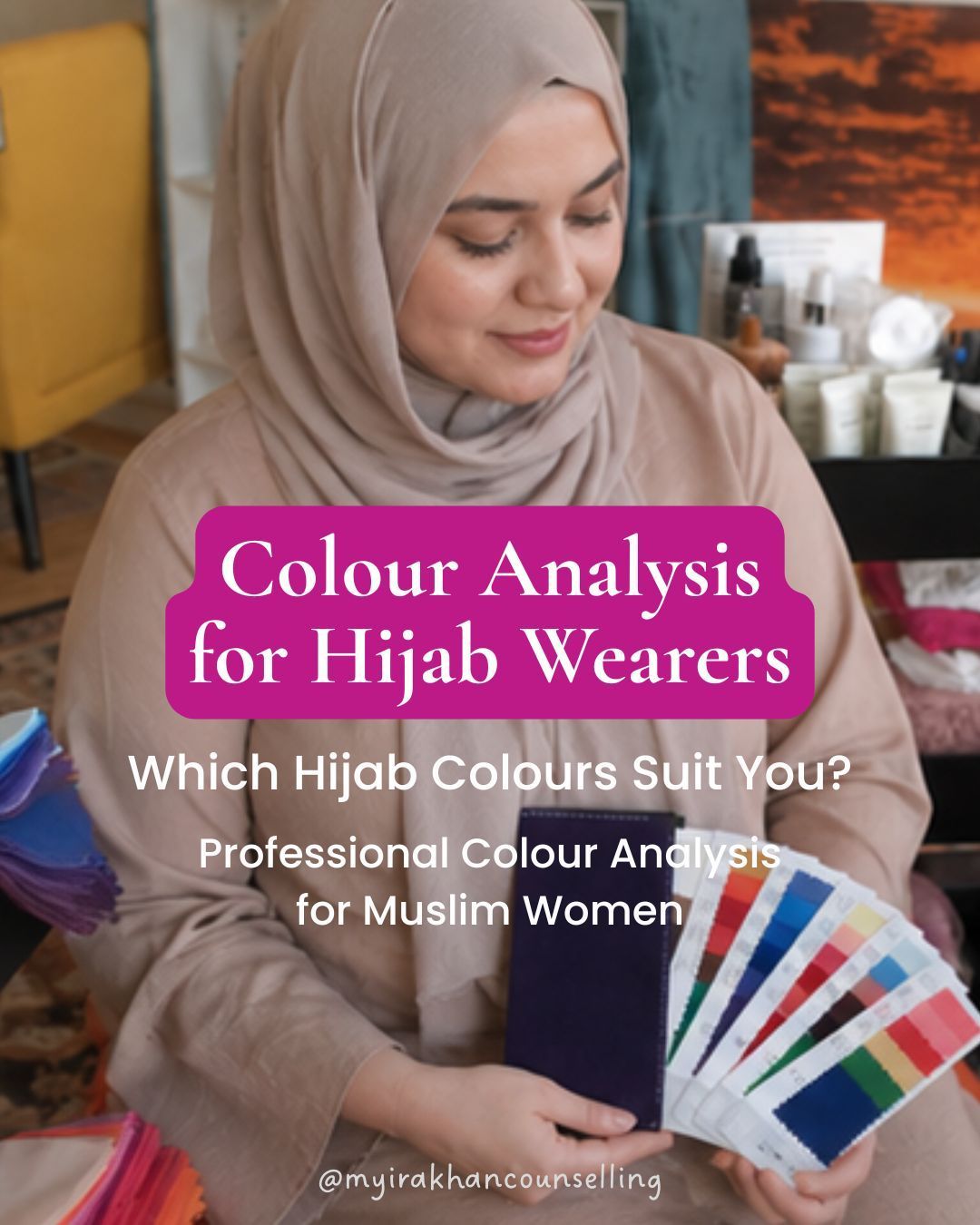
Discover professional colour analysis for hijab wearers in Leicester. Learn which hijab colours harmonise with your natural colouring through Colour Me Beautiful.
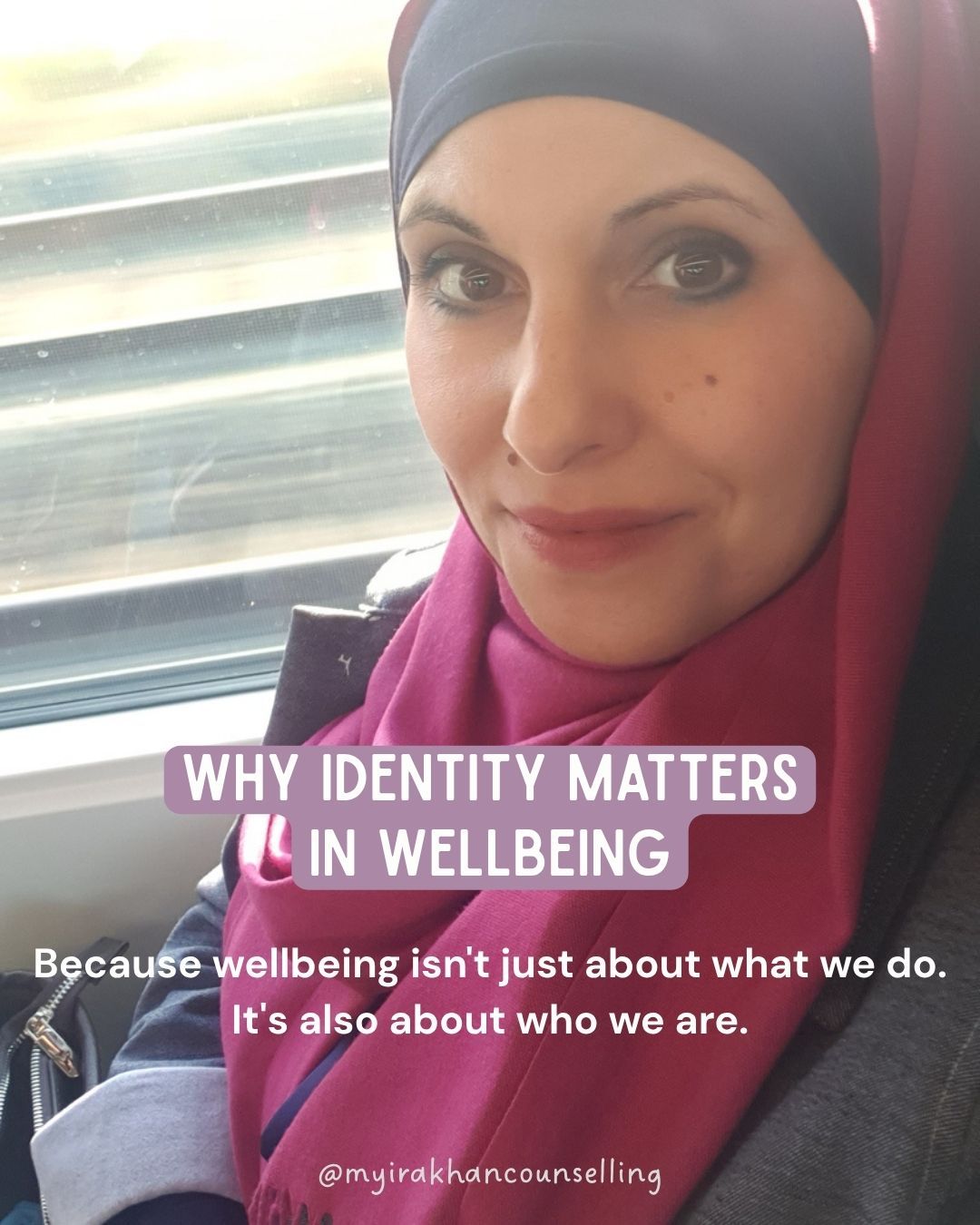
Explore why identity matters in wellbeing and how culture, relationships, belonging and self-understanding shape how we feel and thrive.
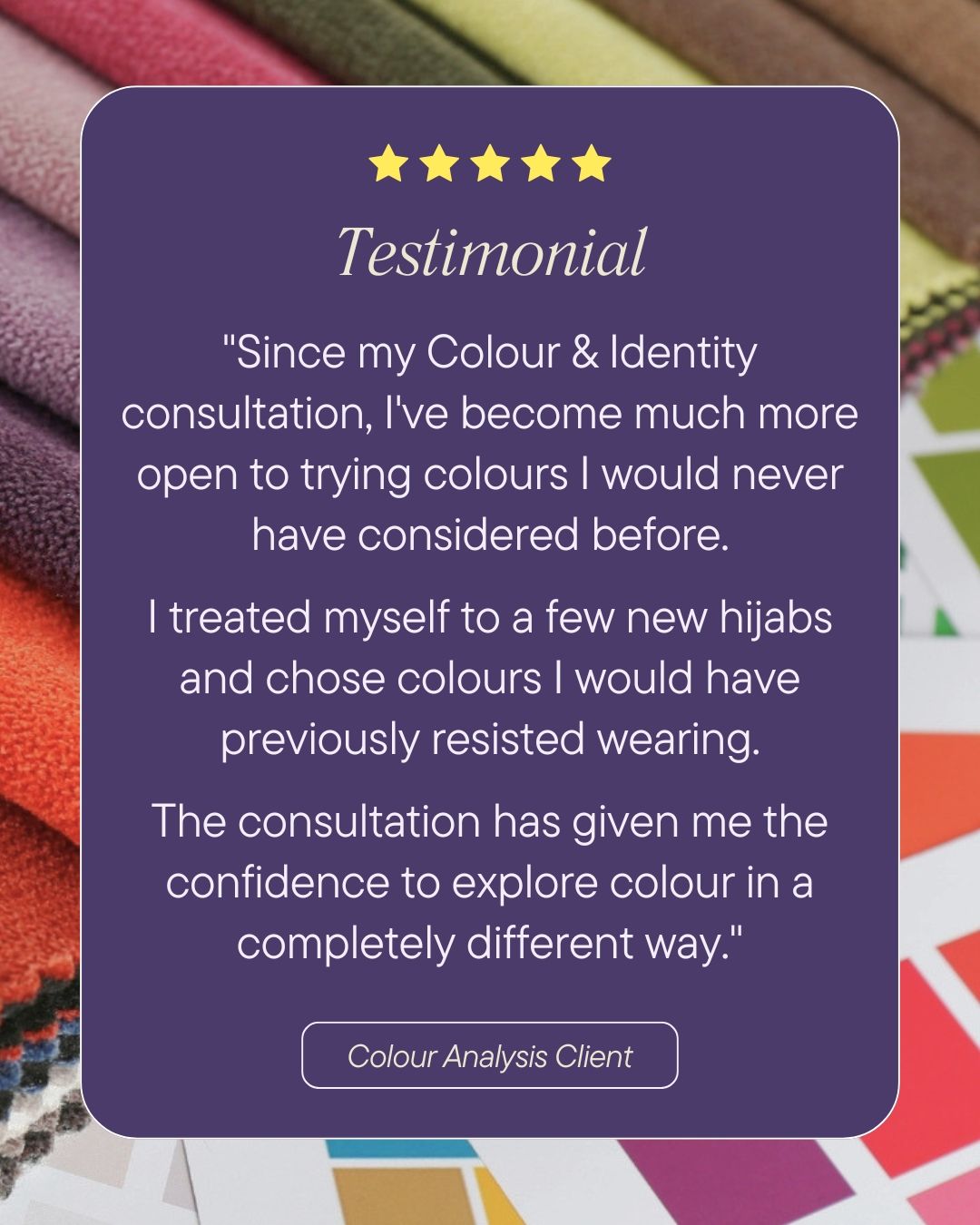
Read a client’s experience of a Full Colour Analysis consultation in Leicester, exploring personalised colours, confidence and discovering a colour palette that feels uniquely them.

Explore four shifts towards anti-oppressive wellbeing, from safe spaces to safe enough, cultural competence to attunement, and beyond mental health.
