What Does Holistic Wellbeing Really Mean?

What Does Holistic Wellbeing Really Mean?
We often talk about wellbeing as though it is a collection of separate things.
Physical wellbeing.
Emotional wellbeing.
Mental wellbeing.
Spiritual wellbeing.
Social wellbeing.
Relational wellbeing.
And while all of these matter, I think there is another way of understanding wellbeing.
Through relationships.
At the heart of my approach to wellbeing are three relationships:
Our relationship with Allah.
Our relationship with ourselves.
Our relationship with others.
Because we don't experience wellbeing in separate categories.
We experience life as whole people.
Wellbeing Is More Than Self-Care
Self-care has become a familiar part of conversations about wellbeing.
We're encouraged to rest, exercise, eat well, set boundaries, take time for ourselves and manage our stress.
These things can be valuable.
But wellbeing isn't simply about becoming better at looking after ourselves.
Sometimes the question needs to be bigger:
What is the quality of the relationships that shape my life?
Because we are relational beings.
Our wellbeing is influenced by our connection to others, our relationship with ourselves, our communities and, for Muslims, our relationship with Allah.
This means wellbeing cannot always be reduced to individual responsibility.
Sometimes what we need isn't another self-care strategy.
Sometimes we need connection.
Sometimes we need support.
Sometimes we need to repair a relationship.
Sometimes we need to change a relationship.
Sometimes we need to reconnect with ourselves.
And sometimes we need to reconnect with Allah.
Our Relationship With Allah
For Muslims, spirituality isn't an optional extra added onto wellbeing.
Our relationship with Allah can be central to how we understand ourselves, our lives and our purpose.
Faith can provide a sense of meaning, connection, hope and direction.
It can shape how we understand difficulty, uncertainty, responsibility, gratitude and trust.
This doesn't mean that faith makes life easy or that Muslims should never experience distress.
We can have strong faith and still experience grief, anxiety, exhaustion, uncertainty or pain.
Rather, our relationship with Allah can become part of how we make sense of what we experience.
It gives us another dimension through which to understand wellbeing.
Our Relationship With Ourselves
There is also the relationship we have with ourselves.
How do you speak to yourself when things go wrong?
Do you understand your own needs?
Can you recognise your emotions without judging yourself for having them?
Can you rest without believing you have to earn it?
Can you accept parts of yourself that don't fit other people's expectations?
Our relationship with ourselves can influence almost every other relationship we have.
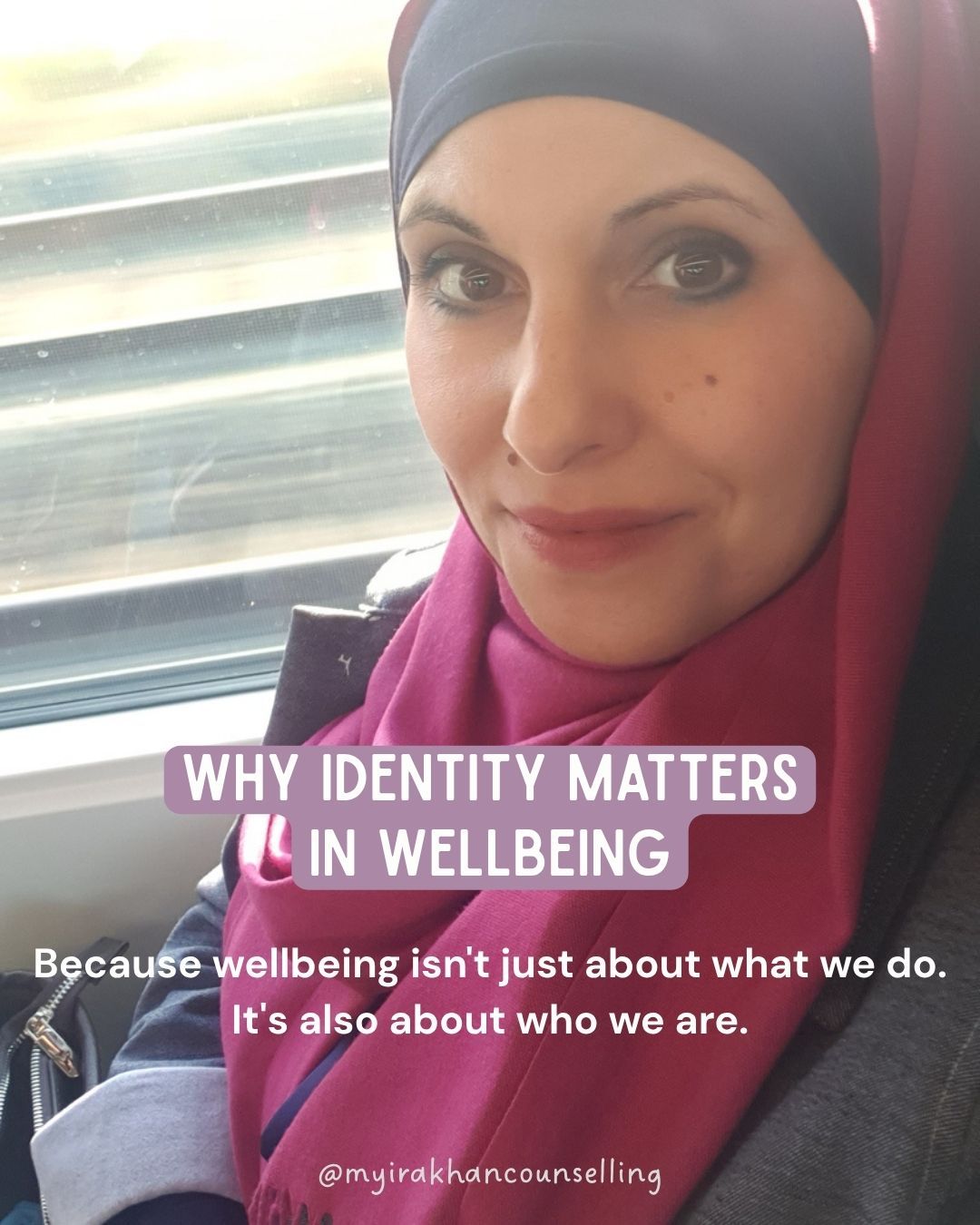
And this is where identity becomes important.
Who we believe we are affects how we move through the world.
Our identity is shaped by our relationships, culture, faith, family, communities and lived experiences.
Sometimes we can become disconnected from ourselves because we have spent years adapting to what other people need or expect from us.
Wellbeing can therefore involve more than managing difficult emotions.
It can involve asking:
Who am I?
What matters to me?
What do I need?
What have I learnt to believe about myself?
And am I living in a way that feels aligned with who I am and what I value?
Our Relationship With Others
None of us experience wellbeing in isolation.
Our relationships can be sources of love, connection, belonging and support.
They can also be sources of stress, conflict, pressure and hurt.
The quality of our relationships matters.
So does our experience of belonging.
Do we have people we can turn to?
Do we feel seen and understood?
Can we be ourselves?
Do our relationships allow us to give and receive care?
Are there relationships where we are constantly having to shrink, perform or explain ourselves?
Sometimes improving wellbeing means nurturing the relationships that sustain us.
Sometimes it means establishing boundaries.
Sometimes it means asking for help.
And sometimes it means recognising that a relationship is affecting our wellbeing and deciding what needs to change.
These Relationships Are Connected
The three relationships aren't separate boxes.
Allah ↔ Self ↔ Others
They influence one another.
Our relationship with Allah can shape how we understand ourselves.
Our relationship with ourselves can influence the relationships we form with others.
Our relationships with others can affect our emotional and psychological wellbeing.
And our experiences of belonging, exclusion, love, rejection and connection can influence how we understand ourselves and our place in the world.
This is why I think a genuinely holistic approach to wellbeing needs to look beyond individual symptoms or behaviours.
We need to look at the relationships that surround the person.
Wellbeing Isn't About Perfect Balance
Perhaps this is also why I am cautious about the idea that we need to achieve the perfect work-life balance or have every area of our life under control.
Life isn't static.
Relationships change.
Circumstances change.
Our needs change.
Our faith may go through periods of strength and difficulty.
Our sense of identity can evolve.
There will be seasons when one relationship requires more attention than another.
Holistic wellbeing isn't about getting everything perfectly balanced.
It is about remaining connected, paying attention and nurturing what matters.
What Might Nurturing These Relationships Look Like?
It might mean making more intentional time for prayer and spiritual connection.
It might mean learning to speak to yourself with greater compassion.
It might mean reaching out to someone rather than trying to cope alone.
It might mean having a difficult conversation.
It might mean setting a boundary.
It might mean reconnecting with a part of your identity you've neglected.
It might mean asking yourself whether your daily life reflects the values you say matter to you.
And sometimes it might simply mean pausing and asking:
How are my relationships affecting my wellbeing?
A Different Way of Thinking About Wellbeing
For me, wellbeing isn't about becoming a perfectly balanced, endlessly resilient version of ourselves.
It isn't about eliminating every difficulty.
And it isn't something we can achieve entirely on our own.
Wellbeing is relational.
It is connected to our relationship with Allah, our relationship with ourselves and our relationships with others.
When we nurture those relationships, we create stronger foundations from which to navigate life.
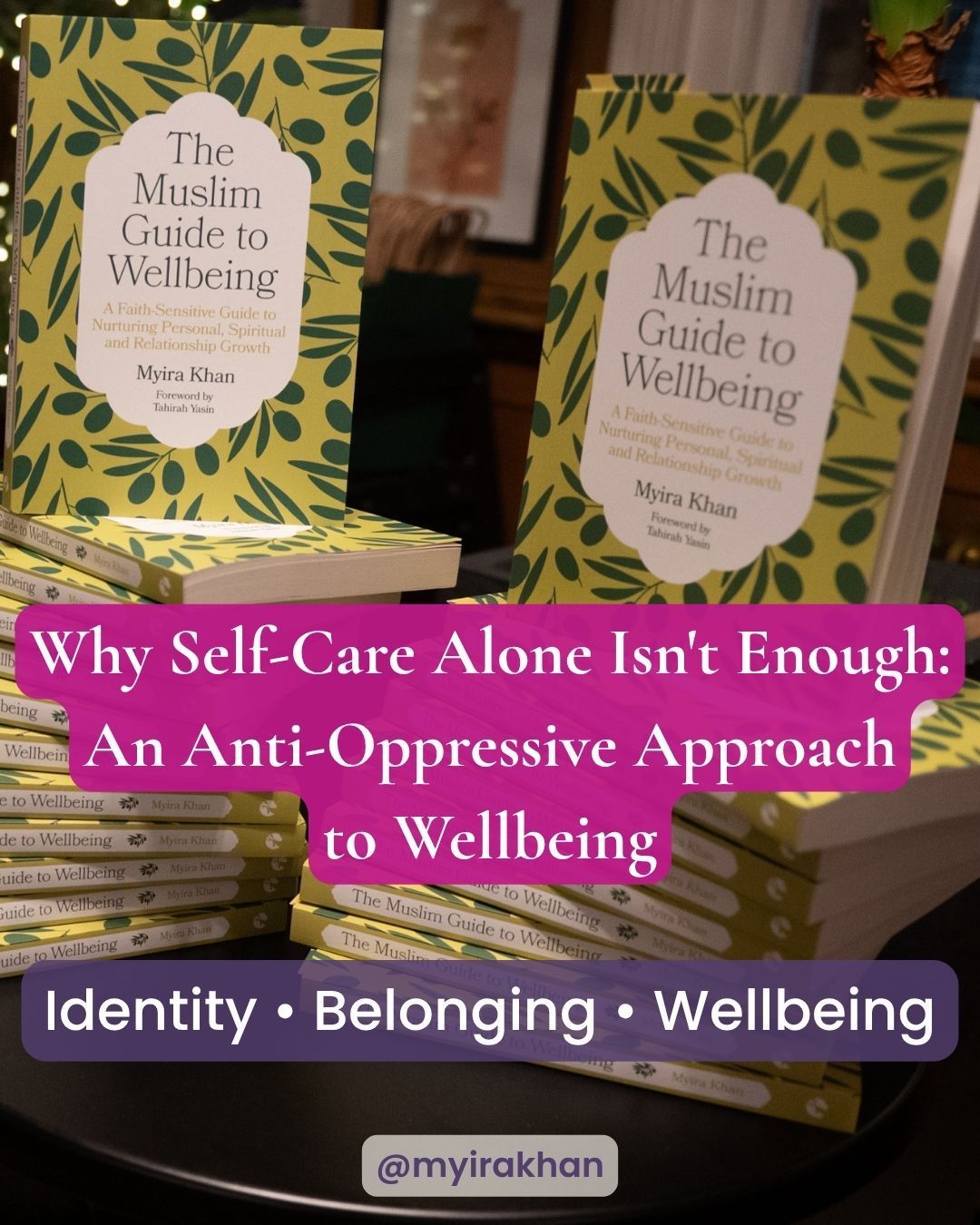
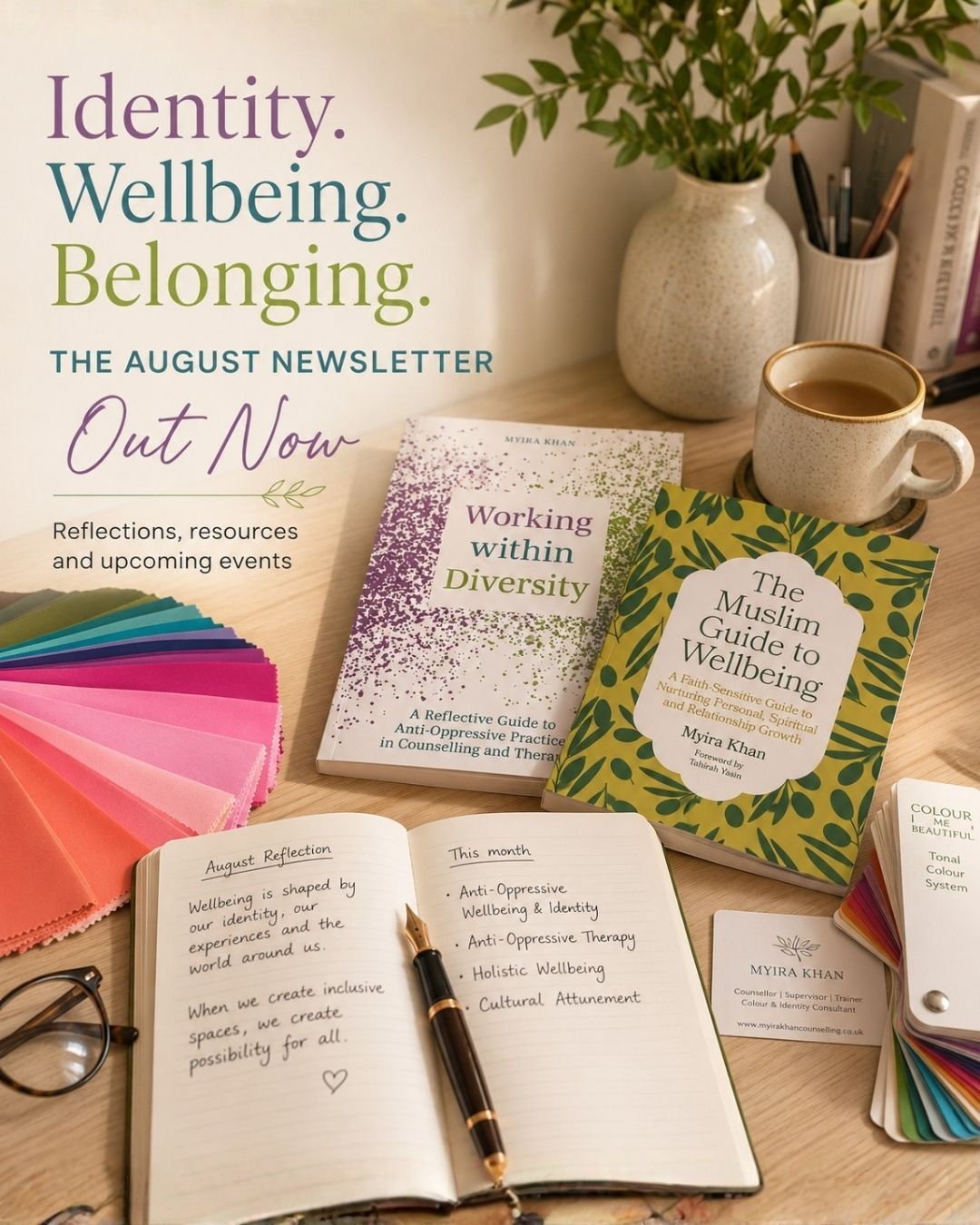
This is the thinking behind my book, The Muslim Guide to Wellbeing.
I wanted to explore wellbeing from a perspective that recognises the whole person — including faith, identity, relationships, emotional and psychological wellbeing, community, meaning and the realities of everyday life.
Because perhaps one of the most important questions we can ask isn't simply:
"What do I need to do to feel better?"
But:
"What relationships do I need to nurture to live well?"
And perhaps that is where a more holistic understanding of wellbeing begins.